When you're selling your Utah home without a real estate agent, pricing it correctly is the single most important thing you'll do. Price too high and buyers scroll past. Price too low and you leave thousands of dollars on the table. The tool that agents use to price homes — and that you can do yourself — is a utah fsbo comparative market analysis, commonly called a CMA.
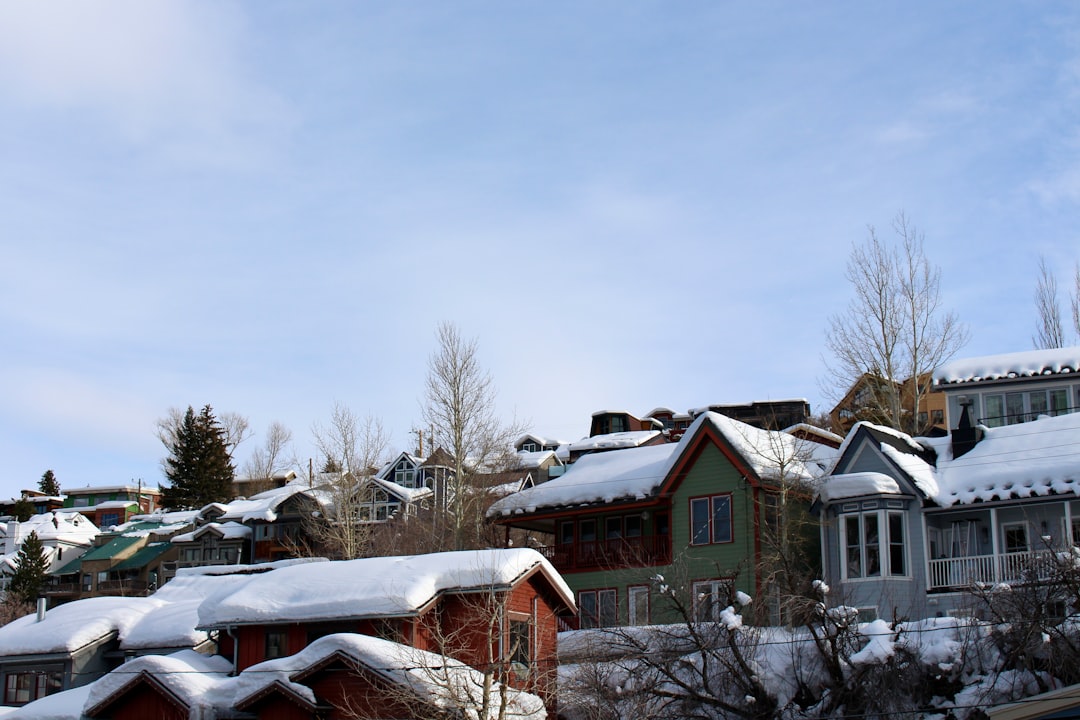 Photo by Scott Greer on Unsplash
A CMA is not a formal appraisal. It's a research-based pricing estimate that compares your property to similar homes that have recently sold nearby. Done correctly, it gives you a defensible asking price — one you can explain to buyers when they ask how you arrived at your number.
What Makes a Utah CMA Different From a National One
Utah's real estate market has characteristics that make cookie-cutter pricing tools unreliable. National AVMs (automated valuation models) like Zillow's Zestimate frequently miss the mark in Utah because:
- County-by-county variation is significant. A home in Draper (Salt Lake County) will price very differently from a similar home in Riverton or Eagle Mountain (Utah County), even at the same square footage.
- Utah's topography affects value. Mountain views in Wasatch Front communities (Park City, Heber, Midway) command premiums that don't apply across the valley floor.
- New construction competes aggressively. In fast-growing areas like Saratoga Springs, Lehi, and St. George, builders are offering incentives that affect resale pricing.
- HOA status matters. In Daybreak (South Jordan), Thanksgiving Point communities, and many Washington County subdivisions, HOA fees are a meaningful factor that affects what buyers will pay. (When you accept an offer, you'll also need to budget for HOA transfer fees at closing.)
These nuances are why Utah FSBO sellers shouldn't rely solely on Zillow or Redfin for pricing.
Step 1: Pull Recent Sales From the Correct Sources
Start with the Utah MLS data, which you can access through:
- Redfin: Filter by "Sold" in your zip code, 6-month window, similar square footage
- Zillow: Use the "Recently sold" view and filter by beds/baths/size
- Utah County Assessor / Salt Lake County Assessor: Free public record searches that show actual recorded sale prices, not listed prices
- WFRMLS (Wasatch Front Regional MLS): Some FSBO-friendly brokers provide limited MLS access for a flat fee
You're looking for homes that have closed (not just listed) in the past 90–180 days. In fast-moving markets like 2024 Salt Lake County, 90 days is better. In slower markets or rural counties (Tooele, Sanpete, Box Elder), extend to 6 months.
Step 2: Find True Comparables
Ideal comps share these traits with your property:
- Same county and ideally same school district — This matters enormously to Utah buyers with school-age children
- Similar square footage — Stay within 15–20% of your home's finished square footage
- Same number of bedrooms and bathrooms
- Similar lot size — A 0.25-acre lot in Sandy vs. a 0.10-acre lot in Murray is a meaningful difference
- Similar age — Homes built in the 1970s and homes built in 2010 don't compare directly, even at the same square footage
- Similar finishes — Updated kitchens, finished basements, and single-level vs. two-story all affect price
Aim for 3–5 solid comps. If you can't find 5, widen your search area by one zip code at a time.
Step 3: Adjust for Differences
No two homes are identical. Once you've pulled your comps, adjust for the differences:
- Basement: A finished basement in Utah typically adds $15–$30 per square foot to value, depending on county
- Garage: A 3-car garage vs. a 2-car garage may add $8,000–$15,000 in Salt Lake County
- Lot size: Run a price-per-square-foot calculation on the land portion separately from the structure
- Condition: Recent updates (roof, HVAC, kitchen) add value relative to comps that show as original condition
Make a simple spreadsheet: list each comp, its sale price, square footage, and key features. Calculate price per square foot (for a deeper look at how to use this number correctly, see How to Use Price Per Square Foot When Selling FSBO in Utah). Then apply adjustments to arrive at a range — not a single number.
Step 4: Interpret the Range Correctly
Your CMA should produce a price range, not a magic number. For example: "Comps support $435,000–$455,000." Where you price within that range depends on:
- Your timeline: If you need to close in 45 days, price at or slightly below the midpoint (for a full breakdown of what happens between listing and closing, see the Utah FSBO home sale timeline)
- Your condition: If your home is updated and shows well, you can price at the top of the range
- Current absorption rate: How many homes are selling vs. sitting in your area right now
For a deeper look at how to set your actual listing price once you have your CMA, read our guide on how to price your Utah FSBO home.
Common CMA Mistakes Utah FSBO Sellers Make
- Using active listings as comps — Listed prices are not sold prices. A listing at $475,000 doesn't prove your home is worth $475,000 if nothing is actually selling at that price.
- Comparing across county lines — Salt Lake County and Utah County have different tax rates, school districts, and buyer pools. Don't mix them unless the market areas genuinely overlap.
- Ignoring days on market — If a comp sold in 5 days, it may have been underpriced. If it sat for 90+ days before closing, it may have been overpriced and then discounted.
- Skipping the basement adjustment — Utah buyers heavily weight finished square footage. A 2,000 sq ft home with a finished basement is not the same as a 2,000 sq ft home without one.
You Don't Need an Agent to Price Your Home Right
A well-executed CMA is a straightforward research process. It takes 2–3 hours the first time, but it gives you confidence in your asking price and a factual basis for negotiations when buyers make offers. The work you put in here directly translates to dollars at closing.
Ready to get started? Tyler offers a free 15-minute consultation — schedule yours at utahfsbohelp.com/contact.
Questions about your situation?
Book a free 15-minute call with a licensed Utah real estate attorney.
Book a Free ConsultationOr call/text: 801-725-3482